/
Navigation
Chronicles
Browse all articles
Explore
Semantic exploration
Research
Entity momentum
Nexus
Correlations & relationships
Story Arc
Topic evolution
Drift Map
Semantic trajectory animation
Posts
Analysis & commentary
Pulse API
Tech news intelligence API
Browse
Entities
Companies, people, products, technologies
Domains
Browse by publication source
Handles
Browse by social media handle
Detection
Concept Search
Semantic similarity search
High Impact Stories
Top coverage by position
Sentiment Analysis
Positive/negative coverage
Anomaly Detection
Unusual coverage patterns
Analysis
Rivalry Report
Compare two entities head-to-head
Semantic Pivots
Narrative discontinuities
Crisis Response
Event recovery patterns
Connected
Search: /
Command: ⌘K
Embeddings: large
Hyperscale data center — the latest form of infrastructure that follows the same economic cycle as electrical utilities, railroads, and telephone
Infrastructure Economics

The Infrastructure Cycle

Every American infrastructure — electricity, railroads, telephone, broadband, cellular, cloud — has followed the same five-stage economic cycle. Each completes faster than the last.

By Elena Voss · 6 parts · April 2026
15
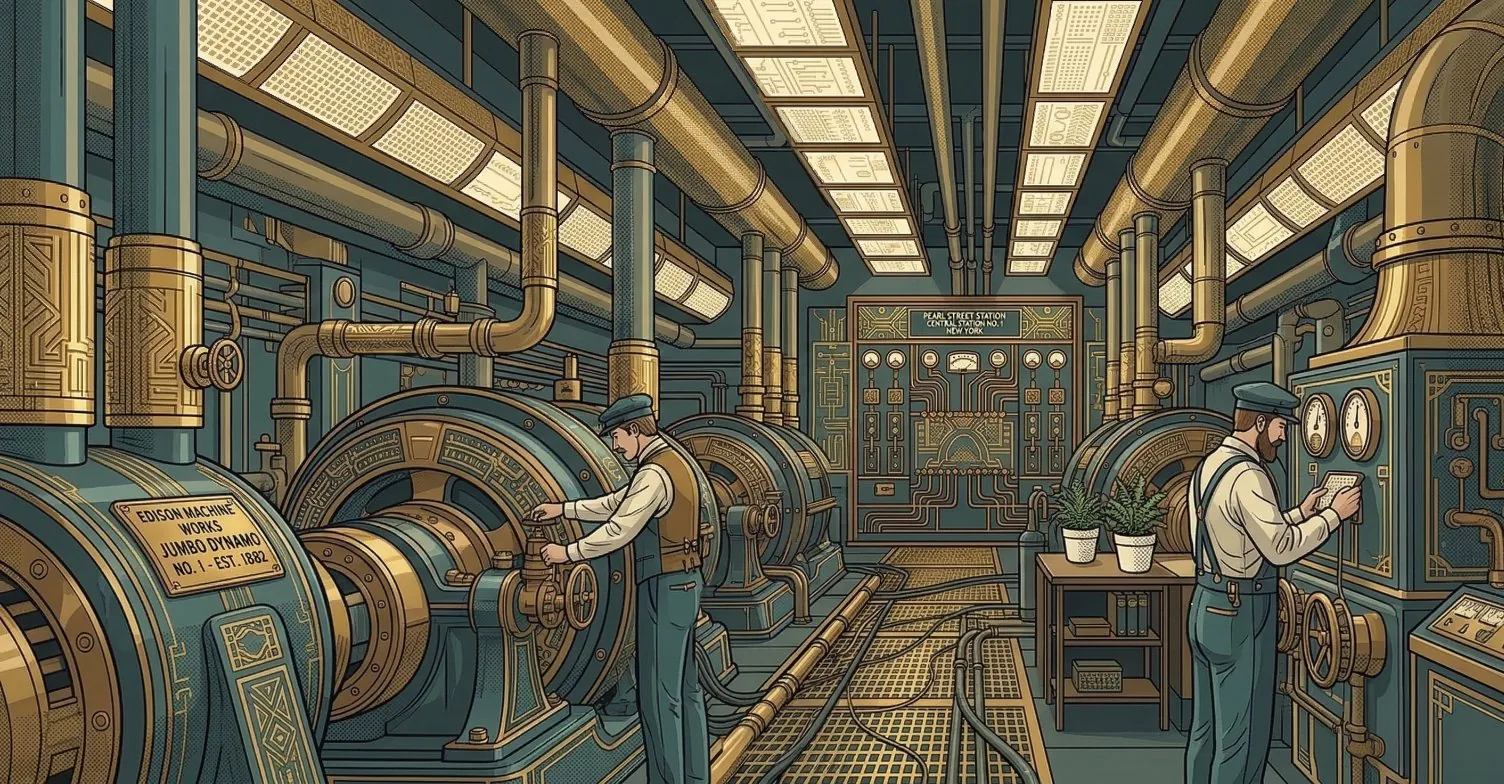
Edison's Pearl Street Station, 1882 — the origin of the American electrical utility
01
Electrical Utilities
1882 – present
Insull's franchise compact, the golden age of falling costs, the 1970s structural break, and the treadmill that never stops.
14% allowed ROE → 10% over four decades
Bell Labs Murray Hill atrium — $500M per year in research funded by captive telephone ratepayers
02
Telegraph & Telephone
1843 – 2006
The most comprehensive vertical monopoly in American corporate history. Broken up in 1984. Reassembled by 2006.
20,000+ independent companies → 1
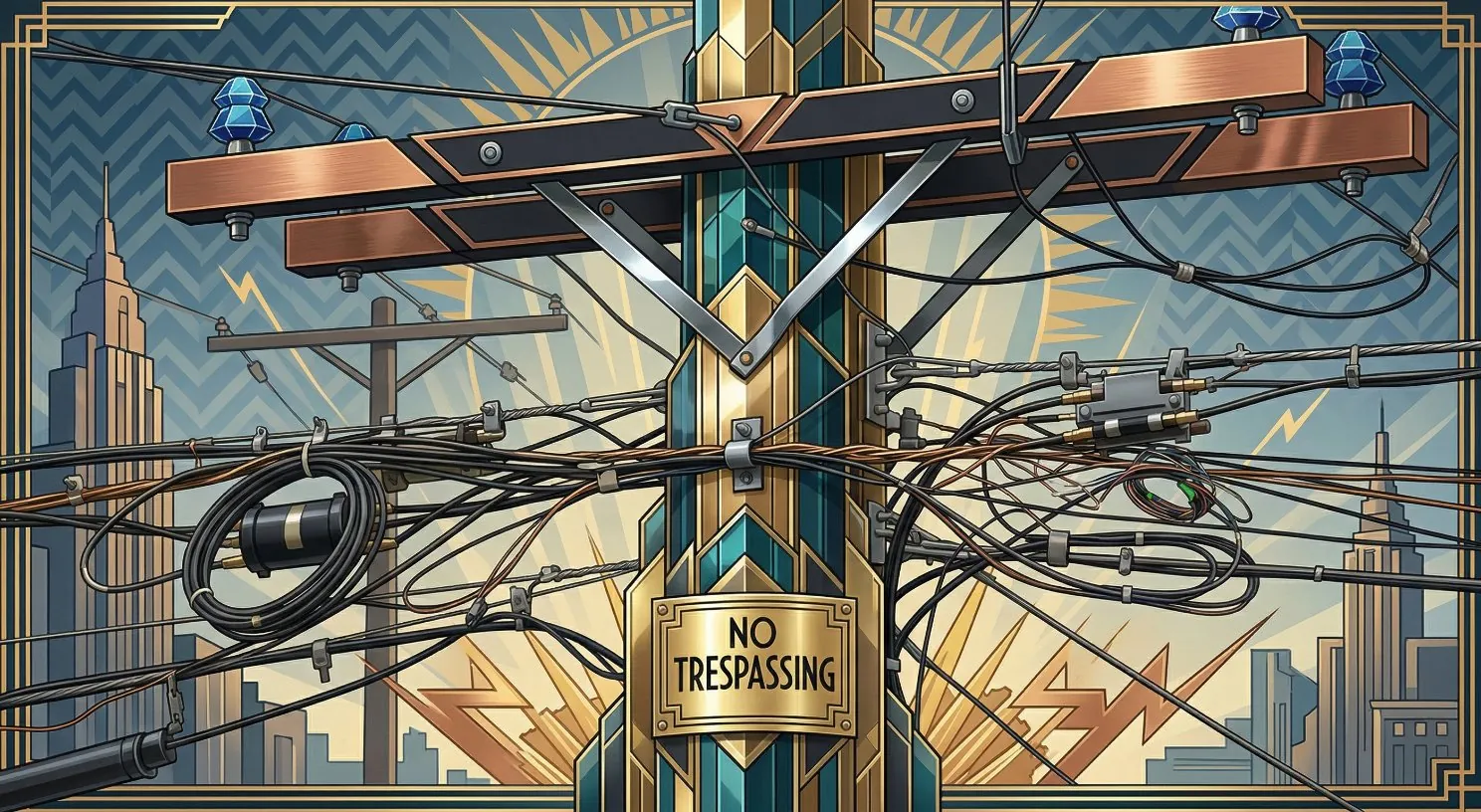
Utility pole with tangled cable attachments — the physical last-mile bottleneck that defines broadband monopoly
03
Internet & Broadband
1969 – present
Five years from public network to private market. One FCC reclassification killed the competitive carriers.
Thousands of ISPs → cable-telco duopoly
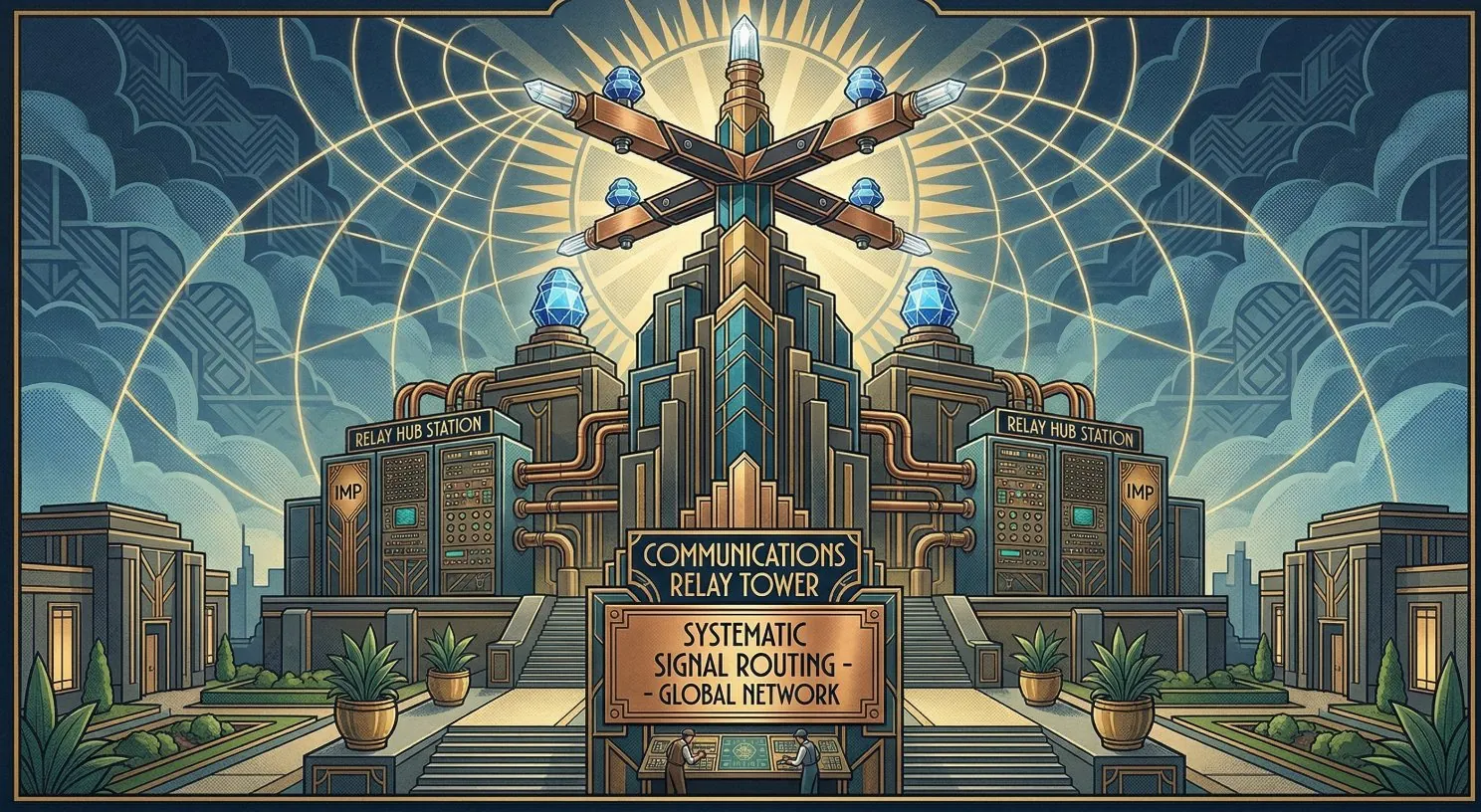
Communications relay tower — wireless infrastructure built on government-allocated spectrum scarcity
04
Cellular & Wireless
1983 – present
Carriers invested hundreds of billions. The value accrued to Apple, Google, and Netflix. The dumb pipe earns dumb-pipe returns.
$65 ARPU → $45. Data volume up 100x.
Empty office with laptop — AI companies whose market power derives from intellectual property, not physical infrastructure
05
Cloud & AI
2006 – present
AWS as Insull. AI introduces a market structure the framework hasn't seen — no physical infrastructure, open-source pressure no prior monopolist faced.
$0.15/GB → $0.023. Margins still above 35%. No wires.
The Five Stages
1
Competitive Chaos
Many entrants, duplicate infrastructure, price wars, instability. Edison's overlapping wires. 20,000 independent phone companies. Hundreds of hosting providers.
2
Scale Consolidation
Fixed-cost economics drive survivors toward monopoly. Unit costs fall with volume. The largest provider wins because it can always undercut.
3
Regulatory Bargain
Political backlash produces a deal: the monopolist accepts government oversight in exchange for franchise protection. Not every infrastructure reaches this stage.
4
Treadmill Maturity
Returns compress — through regulation or competition. Capital over-investment is incentivized. Efficiency gains are captured by regulators or competed away. Margins fall.
5
Structural Disruption
New technology undermines the monopoly premise. Trucking challenged railroads. Mobile challenged wireline. Solar challenges the grid. The cycle resets.

This is a base rate, not a law. The telegraph was subsumed before reaching Stage 3. The internet backbone consolidated through bankruptcy, not regulation. Some cycles bypass the bargain entirely. The pattern establishes what to expect. The deviations reveal what's structurally different about each era.

Telegraph
~22 yr
Electrical
~25 yr
Telephone
~20 yr
Internet
~10 yr
Cloud
~15 yr

Each cycle completes faster because capital formation is faster, political economy is better understood, and regulatory institutions have precedents from prior cycles. The structure is invariant. The clock accelerates.

Regulatory compression is guaranteed, gradual, and floor-bounded. Regulators set a return ceiling; efficiency gains get confiscated; but returns never reach zero because capital won't flow in at zero return. Allowed ROE: 14% in 1980, 10% today. Predictable. Slow. Durable.

Competitive compression is contingent, rapid, and potentially floor-less. T-Mobile forced wireless ARPU from $65 to $45 in a decade. Long-distance rates fell 50% after the Bell breakup. No regulator set the floor — the market did, and markets don't guarantee survival.

Cloud faces the second, not the first. AWS margins have been stable above 30% — managed services deepening the moat faster than IaaS commoditizes. The treadmill hasn't arrived yet. The evidence says: not soon.

Subadditive cost monopoly. Electricity and broadband. Duplicating the physical infrastructure is genuinely wasteful. One provider serves the market at lower cost than two. The textbook natural monopoly.

Government-allocated scarcity. Cellular. The radio spectrum is finite by physics. Concentration comes from the interaction of physics, policy, and the compounding advantages of early allocation.

Scale economies and ecosystem lock-in. Cloud. No wasteful duplication — concentration comes from accumulated advantages: procurement leverage, data gravity, switching costs. The traditional natural monopoly framework fits poorly here.

All three produce the same policy question: what do you do about a dominant provider of essential infrastructure? But they produce it for different reasons, and the answers differ accordingly.

AI infrastructure is between Stages 1 and 2. The dominant entities own no physical infrastructure — no data centers, no fiber, no spectrum. Their market power is intellectual property and model quality: more fragile than a physical monopoly, harder to regulate. You can't rate-base a neural network.